
New Study for People with Mild to Moderate Alzheimer’s Disease

alzheimer-white

The purpose of this study is to investigate whether the study medication can help people with mild to moderate Alzheimer’s Disease improve their mental abilities such as understanding, reasoning, and judgment. The study medication will be given together with an FDA-approved Alzheimer’s medication: Aricept® (donepezil), Exelon® (rivastigmine) or Razadyne® (galantamine).

More about the study:

  • The study drug (MK-7622) is administered in the form of one capsule a day in the morning.
  • There will be 830 participants in this trial

If you are interested, please find the full study details and eligibility criteria listed here.

Eligibility Criteria:

Participants must:

  • be between 55 – 85 years old
  • be diagnosed with mild to moderate Alzheimer’s Disease (12 – 24 MMSE)
  • have a trial partner who is able to attend any study visits that require assessment
  • be currently taking a stable daily dose of acetylcholinesterase inhibitor (AChEI) such as Aricept® (donepezil), Exelon® (rivastigmine patch oral), or Razadyne® (galantamine)

Participants must not:

  • have a history of seizures or epilepsy within the last 5 years
  • have a history of mental illness
  • have been diagnosed or treated for cancer within the past 5 years (excluding basal cell, squamous cell skin cancer, in situ cervical cancer and localized prostate cancer)

Please complete the online questionnaire to check if you’re eligible for the trial.

If you’re not familiar with clinical trials, here are some FAQs:

What are clinical trials?

Clinical trials are research studies to determine whether investigational drugs or treatments are safe and effective for humans. All new investigational medications and devices must undergo several clinical trials, often involving thousands of people.

Why participate in a clinical trial?

You will have access to new investigational treatments that would be available to the general public only upon approval. You will also receive study-related medical care and attention from clinical trial staff at research facilities. Clinical trials offer hope for many people and an opportunity to help researchers find better treatments for others in the future.

Learn why I’m talking about this Clinical Trial

Women’s heart attack symptoms are confusing

gettyimages-478524468


/ Friday, November 13, 2015

DEAR DR. ROACH: My question is about symptoms for women’s heart attacks. I have always heard that symptoms for women can be much different from men’s. Instead of the chest-clutching, sharp pain that men can have, I have read that women’s symptoms can be any of these: heartburn or indigestion; pain in the jaw, neck, shoulders, back, one or both arms; fatigue and troubled sleep; dizziness and nausea; or extreme anxiety. Are you KIDDING me? I am a healthy, active 63-year-old woman. I have had all of these symptoms at one time or another. If I acted every time I had one of these symptoms, I would be at the doctor’s office every day. How is one to know which symptoms to take seriously and act on immediately, and which to wait a few days to see if it is temporary?

Thank you for addressing this confusing issue. — J.

ANSWER: I have seen many letters similar to yours. The confusing problem is that it’s true: In women, heart attack symptoms and the symptoms of angina before a heart attack can include all of those vague symptoms. The same is true of men as well, although it’s more likely for women than for men to have symptoms other than the classic left-sided chest discomfort (people are much more likely to describe angina as “discomfort” or “pressure” than “pain”).

So your question is entirely valid: How do you know when to take common symptoms seriously? The first thing I would say is that the greater your risk for heart disease, the more seriously you should take any symptom. Age, family history of heart disease, high blood pressure and cholesterol, lack of regular physical exercise and diabetes are among the most important risk factors.

The second thing I would say is to take new symptoms seriously. If you never get heartburn, for example, then heartburn at age 63 should prompt concern.

Third, context matters. Symptoms such as nausea or jaw pain that occur with exercise — even carrying a bag of groceries or walking up stairs — is definitely a reason to talk to your doctor.

Most women don’t know that heart disease remains their No. 1 killer, far outstripping breast cancer (or any cancer). Both women and men need to take even vague symptoms seriously, especially if the symptoms are new, exertional or if the person has several risk factors. As a primary-care doctor, I’d rather see my patient for her concerns that symptoms may be heart disease than see her in the ICU with a heart attack.

From http://health.heraldtribune.com/2015/11/13/womens-heart-attack-symptoms-are-confusing/


Mohs surgery

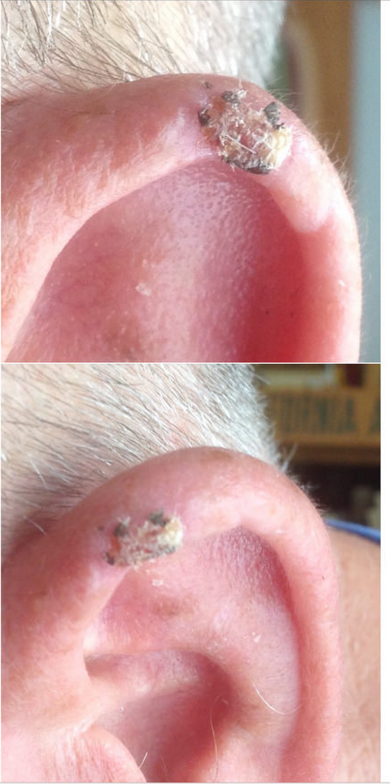
tom-earMy husband had a Mohs surgery on his ear a couple months ago and it was a really good way to get rid of ALL the cancer.

His surgeon did it in really interesting way. I had thought that they would take the first slice, then wait in the room where he was while they looked at the pathology, then take another, etc until all the cancer was gone.

Instead, they took the first slice, then back to waiting room. Next person, first slice while they were looking at the pathology, then another person, first slice…

Then a round of second slices, then thirds.

It took longer than I’d thought but it was really good talking to other family members and patients during that time.


From the Mayo Clinic…

Mohs surgery is a precise surgical technique used to treat skin cancer. During Mohs surgery, thin layers of cancer-containing skin are progressively removed and examined until only cancer-free tissue remains. Mohs surgery is also known as Mohs micrographic surgery.

The goal of Mohs surgery is to remove as much of the skin cancer as possible, while doing minimal damage to surrounding healthy tissue. Mohs surgery is usually done on an outpatient basis using a local anesthetic.

Mohs surgery is an improvement to standard surgery (local excision), which involves removing the visible cancer and a small margin of surrounding healthy tissue all at once. Mohs surgery allows surgeons to verify that all cancer cells have been removed at the time of surgery. This increases the chance of a cure and reduces the need for additional treatments or additional surgery.

Are Exercise Recommendations Really Enough to Protect the Heart?

When it comes to preventing heart failure, even the recommended amounts may not be enough, finds a new study

Being inactive is solidly linked to heart problems like heart attack and stroke, and exercise can help lower risk factors—such as high blood pressure and narrowed blood vessels—that are connected to those heart events.

But when it comes to another type of heart condition, heart failure, the effect of physical activity isn’t as clear. If coronary heart disease can be traced to more physical issues, such as blocked arteries or excessive pressure from blood pumping around the body, heart failure is more of a body-wide problem affecting not just the heart but almost every tissue.

In heart failure, the heart gradually loses its ability to effectively pump oxygen-rich blood to the rest of the body, and it can’t keep up with supplying muscles and cells with what they need to function properly. 5.1 million people in U.S. have heart failure.

Source: Are Exercise Recommendations Really Enough to Protect the Heart? | TIME

Latex Allergy Awareness Week: Understanding the Dangers of Latex Overexposure

Latex Allergy Awareness Week 2015By Carrie Soares on October 6th, 2015

Living with a Latex allergy is extremely dangerous; primarily because many people are unaware of its hovering existence. Most don’t realize that an overexposure to latex can cause critical, life-threatening symptoms and reactions.

Did you know that latex is actually found all around us? Chances are, you are eating it when dining at your favorite restaurants, and are handling it at work each day without even realizing…

What is a Latex Allergy?

Latex allergy reactions occur as a result from overexposure to natural Latex rubber proteins. Thousands of people throughout the country are continuing to get sick on a regular basis with no idea as to why.

Those who have been diagnosed with sensitivity or an allergy to latex, often struggle with how to live with the illness, and can spend most of their life suffering through violent reactions.

The tricky and dangerous reality of having an allergy to latex is that people are exposed to Latex in many places without even realizing it. Most reactions are found to occur in restaurants due to using Latex gloves during food prep or while in doctor’s offices and hospitals (both latex-rich environments).

Symptoms to watch out for with Latex Allergies

Latex allergies range from mild to severe, depending on your sensitivity and the degree of latex allergen exposure. Your reaction can worsen with repeated latex exposure. Mayo Clinic describes the mild, more-severe, and anaphylactic shock symptoms of exposure to latex when living with this allergen.

Mild Symptoms:

  • Itching
  • Skin redness
  • Hives or rash

More-Severe Symptoms:

  • Runny nose
  • Itchy, watery eyes
  • Scratchy throat
  • Difficulty breathing
  • Wheezing
  • Cough
  • Sneezing
  • Anaphylactic Shock:  This is the most serious allergic reaction to latex, and can be deadly. Anaphylactic  reactions occur immediately after latex exposure in highly sensitive people, but rarely happens the first time you are exposed.

    Signs & Symptoms of anaphylaxis include:

    • Difficulty breathing
    • Hives or swelling
    • Nausea and vomiting
    • Wheezing
    • Drop in blood pressure
    • DizzinessLoss of consciousness
    • Confusion
    • Rapid or weak pulse

    Source: Latex Allergy Awareness Week: Understanding the Dangers of Latex Overexposure | MedicAlert Foundation

Miniature Portable Dialysis Machine on Fast Track for FDA Approval

I sure hope I never need this but…


An Alternative to Conventional DialysisThe US Food & Drug Administration’s (FDA) fasttrack program, Innovation Pathway, streamlines the approval process for breakthrough technologies.

In 2012, the “Wearable Artificial Kidney” (WAK), promoted by the Wearable Artificial Kidney Foundation, Inc., was awarded fast-track status, along with two other renal projects.

Since then, WAK has made progress with its wearable dialysis machine and is currently involved in animal trials; human trials scheduled for 2017.

The current prototype weighs just 10 pounds and can be carried about the waist of the patient. Another company, AWAK Technologies, has developed a WAK for Peritoneal Dialysis called “ViWAK PD” that weighs just two pounds.

Source: Miniature Portable Dialysis Machine on Fast Track for FDA Approval | Health Cure Center

New drug improves outcome in treatment resistant kidney cancer – ONA


A new drug is proven more effective than standard therapies for advanced kidney cancer in patients with demonstrated drug resistance.A study trial, led by researchers from the Dana-Farber Cancer Institute, compared the effectiveness of a new drug, cabozantinib, with the accepted second-line treatment, everolimus (Affinitor).

The trial enrolled 658 patients with clear cell renal carcinoma; all participants had advanced or metastatic renal cell carcinoma and their disease had worsened following first-line therapy.

Initial therapy for these patients had targeted the vascular endothelial growth factor receptor (VEGFR). Cabozantinib proved to be more effective than everolimus in slowing the growth of cancer in these patients and there were early indications that it may have improved their overall survival as well (progression-free survival was a median of 7.4 months vs 3.8 for those using everolimus).

Toni K. Choueiri, MD, clinical director of the Genitourinary Cancer Treatment Center at Dana-Farber Cancer Institute, and first author of the report, feels that cabozantinib may also have potential as a first-line treatment for kidney cancer.Cabozantinib has received breakthrough therapy designation from the Food and Drug Administration. Report data were published online in the New England Journal of Medicine.

Source: New drug improves outcome in treatment resistant kidney cancer – ONA

Kidney Cancer Awareness Day

kidney-cancer

Did you know that smoking, obesity, certain workplace exposures, a strong family history of kidney cancer, and some medications are all associated with an increased risk of developing this disease?

To learn more, the public is invited to attend a free Kidney Cancer Awareness Day educational program at Winthrop-University Hospital on Saturday, October 3, 2015, from 9 AM to 12 PM.

The event will be held in the Winthrop Research and Academic Center, located at 101 Mineola Boulevard, at the corner of Second Street in Mineola.

Speakers include Aaron Katz, MD, Chairman of the Department of Urology and Jeffrey Schiff, MD, Department of Urology; Mary O’Keeffe, MD, Department of Oncology/Hematology; Corinne Liu, MD and Jason Hoffman, MD, both from the Department of Radiology, will discuss the signs, risk factors and treatment options for kidney cancer. A question and answer period will be included.

Coffee and a light breakfast will be provided. Admission is free, but registration is required. To register and for information about the program or parking, please call Kate Owens (516) 663- 2316 or e-mail kowens@winthrop.org

Source: Kidney Cancer Awareness Day | www.gcnews.com | Garden City News

Cortisone: The End Of An Era

Cortisone is a therapeutic drug used to fight ailments ranging from asthma to arthritis. It was the athlete’s best friend throughout the 20th century. But in orthopedics, there is a significant downside.

Cortisone is naturally produced by the adrenal gland in the body and influences the functioning of most of the body’s systems.

Since the discovery of its antirheumatic properties in 1948 and its synthetic commercial production soon after, the drug has been injected into every swollen joint, every inflamed tendon, sore back and aching body. The anti-inflammatory nature of the drug soothed the pain and reduced the swelling, yet permitted the athlete to further injure themselves time and time again.

We now know that a cortisone injection interferes with the body’s natural healing process, which works like this: When tissues are overused, overstretched or torn, the cells of those tissues release factors that recruit blood vessels, stem cells and healing factors. With that in rush of fluid, the tissue temporarily swells. Over time, with the laying down of new collagen — the protein that makes up most of our body — the injured tissue heals. Some tissues heal normally; others with scar tissue, over time, often can remodel into normal tissue.”The anti-inflammatory nature of the drug soothed the pain and reduced the swelling, yet permitted the athlete to further injure themselves time and time again.”

Cortisone shuts down this cellular recruitment process, reducing swelling, but unfortunately inhibiting healing. The result is that the weakened tissues stay in the weakened state for a longer period of time, sometimes exposing the athlete to repeat injury or permanent damage. This panacea drug has always had this hidden harmful risk. If used too often or in the wrong place such as the Achilles tendon, the tissues can completely rupture and never return to the full, uninjured state.

Read more at: Cortisone: The End Of An Era | Kevin R Stone

What is Addison’s disease?

The adrenal glands are located just above each kidney. They work together with the hypothalamus and pituitary glands in the brain to keep the human body in a stable, constant condition. The pituitary gland, often referred to as the “master” gland, is about the size of a pea and is considered the most important part of a system called the Endocrine System.

In general, the Endocrine System is in charge of body processes that happen slowly, such as cell growth. Faster processes like breathing and body movement are controlled by the Nervous System.

What normally happens is the hypothalamus produces something called “corticotrophin releasing hormone” or CRH. CRH then causes the pituitary gland to produce ACTH leading to the production of Cortisol and ADH by the adrenal glands.

More at Trinidad Express Newspapers: Features | What is Addison’s disease?.