Monday, 12 Weeks Post-Op

falling-behind

Looks like I’m falling w-a-y behind again.  That’s a pretty good thing since that means normal life is resuming.

When we started rehab, DH was the only student – now there are 5 and they seem to get along pretty well.  Slowly but surely, the challenges are getting greater.  Today (or soon) he will start using weights.

Today’s hav is 14 of 36, just over 1/3 of the way through.

He’s been driving pretty normally for a few weeks but still can’t walk the dog.  Maybe that will come after the weights get started.

We had our class with the dietician and there was only one other woman in the class so it was more of a private session.  At the end, 3 of the guys from Mended Hearts came in to see if we had questions.  One said that he liked having me in the meetings and talking about the role of the caregiver!  This is just not me, talking in any group!

Last week, we had out one-on-one with the dietician.  I’d pretty much already learned most of it from online and books but it was good to check.

This week, on Tuesday, we have a class on how the surgery is performed.  I’ve seen videos but it will be nice to see what they have to offer.  We can also observe a live surgery.  We’ll see!

Last week, on Tuesday, we had the privilege of attending a Congressional Caucus on Rare Diseases.  I took the opportunity (of course!) to say a few words about Cushing’s.  If you’re interested, my write-up is here:  Cushing’s on Capitol Hill.

I have an opportunity for a conference in San Francisco in June.  I happened to have airplane credits so I, without thinking, I got 2 tickets.  Hopefully, DH has the go-ahead to fly by then!

I’m amazed at how well things are going at the 3 month mark.  Hopefully, it’s smooth sailing from here on out!

The Ultimate Way to Fitness

Patient Outcomes Significantly Improved By L-Carnitine Following Heart Attack

myocardial infarction - Myokardinfarkt - scheme

myocardial infarction – scheme (Photo credit: Wikipedia)

L-carnitine significantly improves cardiac health in patients after a heart attack, say a multicenter team of investigators in a study published in Mayo Clinic Proceedings. Their findings, based on analysis of key controlled trials, associate L-carnitine with significant reduction in death from all causes and a highly significant reduction in ventricular arrhythmias and anginal attacks following a heart attack, compared with placebo or control.

Heart disease is the leading cause of death in the United States. Although many of the therapies developed in recent decades have markedly improved life expectancy, adverse cardiovascular events such as ventricular arrhythmias and angina attacks still occur frequently after an acute myocardial infarction (heart attack).

It is known that during ischemic events L-carnitine levels are depleted. Investigators sought to determine the effects of targeting cardiac metabolic pathways using L-carnitine to improve free fatty acid levels and glucose oxidation in these patients. By performing a systematic review and meta-analysis of the available studies published over several decades, they looked at the role of L-carnitine compared with placebo or control in patients experiencing an acute myocardial infarction.

L-carnitine is a trimethylamine which occurs in high amounts in red meat and is found in certain other foods, and is also widely available as an over-the-counter nutritional supplement which is claimed to improve energy, weight loss, and athletic performance. Its potential role in treating heart disease was first reported in the late 1970s.

A comprehensive literature search yielded 153 studies, 13, published from 1989-2007, were deemed eligible. All the trials were comparison trials of L-carnitine compared with placebo or control in the setting of acute myocardial infarction.

This systematic review of the 13 controlled trials in 3,629 patients, involving 250 deaths, 220 cases of new heart failure, and 38 recurrent heart attacks, found that L-carnitine was associated with:

  • Significant 27% reduction in all-cause mortality (number needed to treat 38)
  • Highly significant 65% reduction in ventricular arrhythmias (number needed to treat 4)
  • Significant 40% reduction in the development of angina (number needed to treat 3)
  • Reduction in infarct size

There were numerically fewer myocardial reinfarctions and heart failure cases associated with L-carnitine, but this did not reach statistical significance.

First author James J. DiNicolantonio, PharmD, Wegmans Pharmacy, Ithaca, NY, observes, “Although therapies for acute coronary syndrome (ACS), including percutaneous coronary intervention, dual antiplatelet therapy, b-blockers (BBs), statins, angiotensin-converting enzyme inhibitors (ACEIs), omega-3 fatty acids, and cardiac rehabilitation, have markedly improved clinical outcomes, adverse cardiovascular (CV) events still occur too frequently after ACS. One promising therapy for improving cardiac health involves using L-carnitine to improve free fatty acid levels and glucose oxidation.”

“The potential mechanisms responsible for the observed beneficial impact of L-carnitine in acute myocardial infarction are likely multifactorial and may, in part, be conferred through the ability of L-carnitine to improve mitochondrial energy metabolism in the heart by facilitating the transport of long-chain fatty acids from the cytosol to the mitochondrial matrix, where b-oxidation occurs, removing toxic fatty acid intermediates, reducing ischemia induced by long-chain fatty acid concentrations, and replenishing depleted carnitine concentrations seen in ischemic, infarcted, and failing myocardium,” says DiNicolantonio.

L-carnitine is proven to be safe and is readily available over the counter. The investigators agree that the overall results of this meta-analysis support the potential use of L-carnitine in acute myocardial infarction and possibly in secondary coronary prevention and treatment, including angina. They advocate for a larger randomized, multicenter trial to be performed to confirm these results in the modern era of routine revascularization and other intensive medical therapies following acute myocardial infarction. But, says DiNicolantonio, “L-carnitine therapy can already be considered in selected patients with high-risk or persistent angina after acute myocardial infarction who cannot tolerate treatment with ACE inhibitors or beta blockers, considering its low cost and excellent safety profile.”

These findings may seem to contradict those reported in a study published earlier this month in Nature Medicine by Robert A. Koeth and others (Koeth, R. A. et al. Nature Med.*), which demonstrated that metabolism by intestinal microbiota of dietary L-carnitine produced trimethylamine N-oxide (TMAO) and accelerated atherosclerosis in mice. They also noted that omnivorous human subjects produced more TMAO than did vegans or vegetarians following ingestion of L-carnitine, and suggested a possible direct link between L-carnitine, gut bacteria, TMAO, and atherosclerosis and risk of ischemic heart disease.

“The Nature Medicine paper is of interest,” agrees senior investigator Carl J. Lavie, M.D.,FACC,FACP,FCCP, Medical Director of the Cardiac Rehabilitation and Prevention Center at the John Ochsner Heart and Vascular Institute at the University of Queensland School of Medicine in New Orleans, “but the main study reported there was in animals, and unlike our study, lacks hard outcomes.” He also notes that “there are various forms of ‘carnitine’ and our relatively large meta-analysis specifically tested L-carnitine on hard outcomes in humans who had already experienced acute myocardial infarction.”

from Sciences, E. (2013, April 16). “Patient Outcomes Significantly Improved By L-Carnitine Following Heart Attack.” Medical News Today. Retrieved from
http://www.medicalnewstoday.com/releases/259096.php.

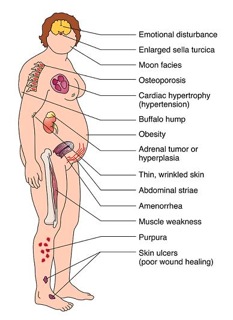
Cushing’s syndrome increased risk for coronary arterial atherosclerosis

cushings-ladyNeary NM. J Clin Endocrinol Metab. 2013;doi:10.1210/jc.2012-3754.

In a recent study supported by the NIH, researchers determined that patients with Cushing’s syndrome have a greater risk for developing coronary arterial atherosclerosis, increasing their rate of cardiovascular morbidity. These findings were published in the Journal of Clinical Endocrinology & Metabolism.

The researchers conducted a prospective case-control study of 15 consecutive patients with adrenocorticotropic hormone (ACTH)-dependent Cushing’s syndrome who were matched with 15 controls (aged 32 to 66 years) with at least one risk factor for cardiac disease (ie, diabetes, hypertension, hyperlipidemia, family history of early-onset coronary artery disease and previous or current smoking).

Researchers used a multidetector CT (MDCT) coronary angiogram scan to measure calcified and noncalcified coronary plaque volume and Agatston scores. Additional variables included fasting lipids, BP, history of hypertension or diabetes and 24-hour urine free cortisol excretion.

According to data, patients with Cushing’s syndrome had significantly greater noncalcified plaque volume and Agatston scores compared with controls (noncalcified plaque volume median [interquartile ranges]: 49.5 vs. 17.9,P<.001; Agatston score: 70.6 vs. 0, P<.05).

Patients with Cushing’s syndrome also demonstrated higher systolic (143 mm Hg) and diastolic (86 mm Hg) BP compared with controls (systolic: 134 mm Hg, diastolic: 76 mm Hg).

The limitations of the study include the small cohort of patients and potential selection bias due to ectopic ACTH secretion. However, the researchers wrote that these findings demonstrate a significant difference between the two groups included in the study.

“Overall, the findings point to the possible causes of cardiovascular morbidity in patients treated with exogenous steroids and indicate the need for further studies of that population,” they wrote.

Disclosure: The researchers report no relevant financial disclosures.

~~~~~~~~~~~~~~

PERSPECTIVE

Alice C. Levine, MD Alice C. Levine

  • It has long been recognized that endogenous hypercortisolism (Cushing’s syndrome) and administration of supraphysiologic doses of glucocorticoids are associated with increased mortality, primarily due to cardiovascular disease. Excess glucocorticoids induce all of the features of the metabolic syndrome including obesity with central weight gain, hypertension, impaired glucose tolerance/diabetes mellitus and dyslipidemia, all of which increase cardiovascular risk. In this small but well-designed study, the authors attempt to determine whether excess glucocorticoids have a direct adverse effect on the coronary vasculature. Utilizing multidetector computerized tomographic (MDCT) coronary angiography, a validated noninvasive method of assessing calcified and noncalcified coronary plaques, they compared measurements of coronary plaques (Agatston score) in 15 patients with ACTH-dependent Cushing’s syndrome (CS) vs. 15 age-, sex- and body weight-matched controls with at least one risk factor for cardiac disease. They found significantly greater coronary calcifications and noncalcified coronary plaque volumes in patients with active or previous hypercortisolism.There are obvious limitations to the study; most notably the small sample size, the predominance of patients with CS due to ectopic ACTH (14/15) and significantly more hypertension in the CS vs. the control group. However, other than the HTN, the groups were well-matched and there was no statistical difference in the Framingham risk scores between groups. This is the first study to demonstrate direct effects of CS on coronary plaque burden.The findings, while unsurprising, underscore several important features of CS which endocrinologists need to consider. Firstly, as there were no statistical differences in plaque burden in patients with CS who were eucortisolemic (4/15) vs. those who were hypercortisolemic (11/15) at the time of study, the effects of CS on the coronary vasculature may persist even after biochemical cure. Many previous studies in larger cohorts have similarly demonstrated that the adverse effects of high glucocorticoids on cardiovascular, metabolic, psychiatric and neurocognitive function may be only partially reversible with disease remission. Secondly, even adjusting for all the confounding variables, hypercortisolism seems to be an independent risk factor for the development of coronary artery disease. The possible mechanisms underlying this observation are discussed and include increases in prothrombotic factors, circulating levels of vascular endothelial growth factor (VEGF) and angiogenesis. It is also plausible that cortisol increases atherosclerosis through the mineralocorticoid rather than the glucocorticoid receptor, suggesting the possibility of treating this particular deleterious effect of hypercortisolism with a mineralocorticoid-receptor blocker such as spironolactone.

    Within the CS group, no significant correlations were observed between the coronary plaque volumes and the duration of CS or urinary free cortisol (UFC) either at presentation or at the time of MDCT. Although this lack of correlation may also be attributable to the small sample size, it is well known that the onset of Cushing’s syndrome is often insidious and it is impossible to pinpoint the exact duration of the abnormality in most patients. This study’s finding of direct, adverse and possibly irreversible effects of hypercortisolism on the coronary vasculature should make endocrinologists even more vigilant in diagnosing and treating the disease as early as possible in its course.

    • Alice C. Levine, MD
    • Professor of medicine, division of endocrinology, diabetes and bone diseases
      Co-Director of The Adrenal Center
      Icahn School of Medicine
      Mount Sinai, New York, NY
  • Disclosures: Levine reports no relevant financial disclosures.

From Healio.com

Wednesday, Nine Weeks Post-Op

day-late

Running Late!  The Nine Week Anniversary was 2 days ago.  I got so tired singing  Holy Thursday, Good Friday and three Easter Services that I’ve just been resting up for a few days.

It also turned out that our son came home Thursday night, after rehab, after that service so my energy has been really sapped.

DH is still doing well, the rehab continues and he’s done 5 as of today.  We also signed up for our first patient meeting next Tuesday and a class on Cardiac Valve Surgery later this month.

So…we have rehab Wednesday and Thursday this week, Mended Hearts on Saturday, Monday rehab, Tuesday patient meeting, Wednesday and Thursday rehab…

Soon we’ll be experts!

Because DS was here, we ate some foods that I doubt are on the new diet.  I hope that there are no setbacks because of this.

Yesterday was one of those busy days.  A friend happened to call on Monday while we were driving back from rehab and DH took the call since I was driving.  As a result, DH, DS, my mom and I all went out with the friend in the afternoon.  In the morning, I had a staff meeting for work.  Our son decided that it was closer for him to take the train back to NYC from our friend’s, so we swung by the train station on the way home.

A tiring, but fun, day.  Our friend also has stairs up to her house, so it was one of the first times DH climbed a lot of them.

In church on Sunday, someone prayed for another who had had surgery before DH’s and wasn’t doing well yet.  It makes me very thankful for how well things are working out here.


Starting Cardiac Rehab

cardiac-rehab-fairfax


It’s started finally!   Tuesday, March 26, 2013 was DH’s first day in Cardiac Rehab, just over 8 weeks post-op.  This was an “intake appointment”, and much longer than the normal ones will be.

We got to choose when the future class would be – either Monday-Wednesday-Friday at 7:00 am or Monday-Wednesday-Thursday at 1:00pm.  Anyone who knows me knows that I chose the afternoon class.  I just didn’t want to get up that early and have to deal with early morning rush hour each of those days.

Diana, the intake nurse was very nice – in fact, everyone we met was.

First things first – money.  We found out that his insurance would pay for most but that there would be a $15 copay each session.  However, we did get a parking voucher saving us $5 on the parking garage.

Description unavailable

Description unavailable (Photo credit: pennstatenews)

We got a packet of information on all kinds of things, including food guides – what to eat, what not to eat.  Hooray!

I noticed a poster showing the image (right) for choosemyplate.gov.  I looked at that site when it first came out – and I’m looking again!

Diana was the one who set up the class times, as well.

Next was Claire, a nurse.  She checked all the meds and vitamins that DH takes.  She said that saw palmetto interfered with one of  his prescriptions and she suggested we take the list to CVS so that they can look for other interactions.

She did an EKG,  checked pulse in several locations, looked at the  scar, checked blood pressure on both arms (sitting and standing), listened to the carotids.

BP was  136/64 right,   112/60 left,   119/70 standing left.

She made an appointment with the dietician for Wednesday April 17 at  2:30, after a rehab class.

Turns out that there are patient meetings on the second Tuesday of each month.  We’re getting very busy with patient meetings, Mended Hearts and rehab plus doctor appointments!


They were out of t-shirts his size so we got one that was very large.  Another one will be forthcoming…sometime.

These shirts are special because they have a pocket for the portable EKG machine over the heart in addition to the obligatory logo on the back.  As luck would have it, DH was wearing a t-shirt with a pocket.

DH was hooked up to the EKG.  I gathered that he’ll do that himself in the future.

Next up – Shelly, an exercise physiologist.  She talked a bit, asked DH how often he got new shoes.  She said that it should be every 6 months.  Who knew?

She said to drink water every 15 minutes while exercising.

DH started off slow – Treadmill 5 minutes; Bike 15 minutes; Walked on indoor track for 4 laps

When he was done, we went to the Healthy Heart Cafe for a bit of lunch.

Wednesday, Day 2

We got there in plenty of time.  DH turned out to be the only person in this class, at least for now.

He did his exercises but was told he needed to eat breakfast in the future – his blood pressure was too low.

It’s becoming a habit – when he was done, we went to the Healthy Heart Cafe for another bit of lunch.

I had bought him a Groupon for a local garden shop as a Christmas gift.  Of course, I had no idea then that he wouldn’t be doing much gardening this year.  In any event, it was going to expire on March 30, so we went there after rehab and got a few things 🙂  They may all become house plants – we’ll see!

Absolute exhaustion by the time we got home.

Cardiac Rehabilitation Starts Today!

cardiac-rehab

DH finally starts his cardiac rehab today, just over 8 weeks after his triple bypass.

Cardiac rehabilitation (rehab) teaches you how to be more active and make lifestyle changes that can lead to a stronger heart and better health. Cardiac rehab can help you feel better and reduce your risk of future heart problems.

In cardiac rehab, you work with a team of health professionals. Often the team includes a doctor, a nurse specialist, a dietitian, an exercise therapist, and a physical therapist. The team designs a program just for you, based on your health and goals. Then they give you support to help you succeed.

If you have had a heart attack, you may be afraid to exercise. Or if you have never exercised, you may not know how to get started. Your cardiac rehab team will help you start slowly and work up to a level that is good for your heart.

Many hospitals and rehab centers offer cardiac rehab programs. You may be part of a cardiac rehab group, but each person will follow his or her own plan.

Who should take part in cardiac rehab?

Doctors often prescribe cardiac rehab for people who have had a heart attack or bypass surgery. But people with many types of heart or blood vessel disease can benefit from cardiac rehab. Rehab might help you if you have:

  • Heart failure.
  • Peripheral artery disease (PAD).
  • Had or plan to have a heart transplant.
  • Had angioplasty to open a coronary artery.
  • Had another type of heart surgery, such as valve replacement.

Often people are not given the chance to try cardiac rehab. Or they may start a program but drop out. This is especially true of women and older adults. And that’s not good news, because they can get the same benefits as younger people. If your doctor suggests cardiac rehab, stay with it so you can get the best results.

Medicare will pay for cardiac rehab for people with certain heart problems. Many insurance companies also provide coverage. Check with your insurance company or your hospital to see if you will be covered.

What happens in cardiac rehab?

In cardiac rehab, you will learn how to:

  • Manage your heart disease and problems such as high blood pressure and high cholesterol.
  • Exercise safely.
  • Eat a heart-healthy diet.
  • Quit smoking.
  • Reduce stress and depression.
  • Get back to work sooner and safely.

Exercise is a big part of cardiac rehab. So before you get started, you will have a full checkup, which may include tests such as an electrocardiogram (EKG or ECG) and a “stress test” (exercise electrocardiogram). These tests show how well your heart is working. They will help your team design an exercise program that is safe for you.

At first your rehab team will keep a close watch on how exercise affects your heart. As you get stronger, you will learn how to check your own heart rate when you exercise. By the end of rehab, you will be ready to continue an exercise program on your own.

What are the benefits of cardiac rehab?

Starting cardiac rehab after a heart attack can lower your chance of dying from heart disease and can help you stay out of the hospital. It may reduce your need for medicine.

Cardiac rehab may also help you to:

  • Have better overall health.
  • Lose weight or keep weight off.
  • Feel less depressed and more hopeful.
  • Have more energy and feel better about yourself.

Changing old habits is hard. But in cardiac rehab, you get the support of experts who can help you make new healthy habits. And meeting other people who are in cardiac rehab can help you know that you’re not alone.

Adapted from CardioSmart.org

Monday – Eight Weeks Post-Op

Monday

I’m happy to report that life continues to return to normal.

I was out walking the dog this morning, and it was snowy again.  The sidewalk was very slippery and it reminded me of that Monday two months ago when I was out with her and slipped and fell.  My shin still hurts a bit from that day.

DH has been out to several meetings and has won a court case – all without driving himself.  He’s still having to “pay” for a lot of activity by napping later.

He’s able to easily put on sweaters now that go over his head.

Tomorrow is our first rehab appointment.  We’re both looking forward to that for different reasons.  I’m eager to get my life back on a schedule.  He’s looking forward to being able to drive and become stronger.

We’re still mostly vegetarian.  I hope to get some food/cooking advice at the rehab meeting tomorrow.

DH went to church again yesterday for Palm Sunday, then we went out for breakfast again.  He’s found a healthy meal at a local restaurant without too much prodding.

He’s busy trying to find a timeshare in Japan that we could trade for although it will be a while before we could consider that kind of travel.

On the 20th, I had to make a very difficult decision.  There’s a Cushing’s Conference in Las Vegas next month.  I already had plane tickets but hadn’t registered for the conference or a hotel room.  I decided that I didn’t feel comfortable leaving DH alone for 5 days with a dog he couldn’t walk or a car he might not be able to drive.  I’m also just afraid to be away that long, just in case…

Hopefully, next week’s update will have more good news to report.

Short-Term Stroke Risk Higher Following CABG Than Post-PCI

CABG

Among patients with complex coronary artery disease, coronary artery bypass grafting (CABG), as compared to percutaneous coronary intervention (PCI), is associated with a greater risk of periprocedural stroke, but not long-term stroke, according to a new analysis of the SYNTAX trial published on March 20 in JACC Cardiovascular Interventions. At four-year follow-up, there was no difference in stroke incidence between treatments.

The SYNTAX trial randomized 1,800 patients with de novo three-vessel and/or left main coronary disease to CABG or PCI. Overall, 33 and 20 strokes occurred at four years in the CABG and PCI groups, respectively. In the CABG group, nine of the 33 strokes occurred within 30 days of the procedure, whereas 18 of the 20 strokes in the PCI arm occurred more than 30 days after intervention. However, in a multivariate analysis, CABG was not significantly associated with an increased stroke risk (p=0.089).

Lead investigator Michael J. Mack, MD, FACC, Baylor Healthcare System, Plano, Texas, and colleagues concluded, “The overall incidence of stroke was low at four years in the SYNTAX trial in both CABG- and PCI-treated patients. Though more strokes occurred in the CABG arm than in the PCI arm early in the study, no significant differences were found at four years.”

In an accompanying editorial, Jesse Weinberger, MD, Mount Sinai School of Medicine, New York, and Craig Smith, MD, FACC, Columbia University School of Medicine, New York, noted that this analysis reports different stroke rates than the original study where rates were higher with CABG than with PCI (2.2 vs. 0.6 percent, p=0.003). The current analysis, “focused specifically on stroke, reports a stroke difference of 1 percent (CABG) vs. 0.2 percent (PCI) at 0 to 30 days by intent-to-treat (p=0.037), and three of the nine strokes in the CABG group occurred pre-operatively, so a statistically meaningful difference in an as-treated analysis is doubtful,” they wrote.

“The SYNTAX trial was not specifically designed to determine the etiology of stroke in patients treated with CABG or PCI. It is imperative to establish the causes of stroke during CABG and develop strategies to prevent these strokes,” the editorialists concluded. “A prospective study may be warranted.”

From CardioSource – Short Term Stroke Risk CABG PCI.

Common Foods Loaded with Excess Sodium

salty6

The Salty Six


Eating too many salty foods can create all sorts of health problems, including high blood pressure. But did you know a lot of common foods are packed with excess sodium? It’s not just the french fries and potato chips you need to be careful with.

That’s why the American Heart Association/American Stroke Association is increasing awareness of sodium and the “Salty Six” – common foods that may be loaded with excess sodium that can increase your risk for heart disease and stroke.

Sodium overload is a major health problem in the United States. The average American consumes about 3,400 milligrams of sodium a day – more than twice the 1,500 milligrams recommended by the American Heart Association/American Stroke Association. That’s in large part because of our food supply; more than 75 percent of our sodium consumption comes from processed and restaurant foods.

heart-checkBe sure to keep in mind that different brands and restaurant preparation of the same foods may have different sodium levels. The American Heart Association’s Heart-Check mark—whether in the grocery store or restaurant helps shoppers see through the clutter on grocery store shelves to find foods that help you build a heart-healthy diet.

Sodium doesn’t just affect your heart health, but your physical appearance as well. Excess sodium consumption may make your face feel puffy, give you bags under your eyes, increase swelling in your fingers and make your jeans look, and feel, tighter. In fact, from an American Heart Association/American Stroke Association consumer poll, 75 percent of respondents stated that their pants feeling too tight is their least favorite effect of bloating which may be associated with excess sodium consumption.

As you gear up for your next grocery store run or order from the menu, keep the Salty Six in mind. All you need to do to make a heart-healthy choice is to look for the Heart-Check mark. Another helpful tool is the Nutrition Facts label on the package and calorie labeling in restaurants, which together with the Heart-Check mark helps you make wise choices for the foods you and your family eat. Make the effort to choose products that contain less sodium. It’s worth it!

Here’s a quick look at the Salty Six, the top sources for sodium in today’s diet (download the infographic as a pdf)

Article from http://www.heart.org/HEARTORG/GettingHealthy/NutritionCenter/HealthyDietGoals/Salty-Six_UCM_446090_Article.jsp