Adventures with Human Growth Hormone

I’ve been dealing with Cushing’s since 1983.  The after effects of pituitary surgery since 1987, kidney cancer since 2006.  It’s time I felt better, already!

From 1999 to today,  not-so-quick recap from my bio:

1999 ~ Many people are now finding that they need HgH after pituitary surgery, so an Insulin Tolerance Test was performed. My endocrinologist painted a very rosey picture of how wonderful I’d feel on Growth Hormone. It sounded like a miracle drug to me!

I was only asked to fast before the ITT and to bring someone with me to take me home. There is no way I could have driven home. I got very cold during the test and they let me have a blanket. Also, though, lying still on that table for so long, my back hurt later. I’d definitely take – or ask for – a pillow for my back next time. They gave me a rolled up blanket for under my knees, too.

I don’t remember much about the test at all. I remember lying very still on the table. The phlebotomist took blood first, then tried to insert the IV (it took a few tries, of course). Then the endo himself put the insulin in through the IV and took the blood out of that. I remember the nurse kept asking me stupid questions – I’m sure to see how I was doing on the consciousness level. I’d imagine I sounded like a raving lunatic, although I believed that I was giving rational answers at the time.

Then everything just got black…I have no idea for how long, and the next thing I knew I was becoming aware of my surroundings again and the doctor was mumbling something. They gave me some juice and had me sit up very slowly, then sit on the edge of the table for a while. When I thought I could get up, they gave me some glucose tablets “for the road” and called my friend in. I was still kind of woozy, but they let her take me out, very wobbly, kind of drunk feeling.

My friend took me to a close-by restaurant – I was famished – but I still had trouble with walking and felt kind of dazed for a while. When I got home, I fell asleep on the sofa for the rest of the day.

But the most amazing thing happened. Saturday and Sunday I felt better than I had for 20 years. I had all this energy and I was flying high! It was so wonderful and I hoped that that was from the HgH they gave me to wake me up.

2001 ~ I had the ITT this morning. I don’t get any results until a week from Thursday, but I do know that I didn’t recover from the insulin injection as quickly as I did last time. The endo made a graph for my husband of me today and a “normal” person, although I can’t imagine what normal person would do this awful test! A normal person’s blood sugar would drop very quickly then rise again at about a right angle on the graph.

I dropped a little more slowly, then stayed very low for a long time, then slowly started to rise. On the graph, mine never recovered as much as the normal person, but I’m sure that I did, eventually.

The test this time wasn’t as difficult as I remember it being, which is good. Last time around, I felt very sweaty, heart pounding. I don’t remember any of that this time around. I do know that I “lost” about an hour, though. The phlebotomist took the first blood at 9:15, then the endo injected the insulin and took blood every 15 minutes after that. I counted (or remembered) only 4 of the blood draws, but it was 11:30 when they told me that my sugar wasn’t coming up enough yet and I’d have to stay another 30 minutes. It actually ended up being another hour.

Kim, the phlebotomist, asked me if I got a headache when they “crashed me” and I have no recollection of any of that.

Like last time, I was very, very cold, even with the blanket and my left arm – where the heplock was – fell asleep. Other than that – and my back hurting from lying on one of those tables all that time this wasn’t as bad as I remembered.

So, I waited for 10 days…

September 2004 ~ My new doctor was wonderful. Understanding, knowledgeable. He never once said that I was “too fat” or “depressed” or that all this was my own fault. I feel so validated, finally.

He looked through my records, especially at my 2 previous Insulin Tolerance Tests. From those, he determined that my growth hormone has been low since at least August 2001 and I’ve been adrenal insufficient since at least Fall, 1999 – possibly as much as 10 years! I was amazed to hear all this, and astounded that my former endo not only didn’t tell me any of this, he did nothing. He had known both of these things – they were in the past records that I took with me. Perhaps that was why he had been so reluctant to share copies of those records. He had given me Cortef in the fall of 1999 to take just in case I had “stress” and that was it.

The new endo took a lot of blood (no urine!) for cortisol and thyroid stuff. I’m going back on Sept. 28, 2004 for arginine, cortrosyn and IGF testing.

He has said that I will end up on daily cortisone – a “sprinkling” – and some form of GH, based on the testing the 28th.

October 2004 ~ I had cortrosyn and arginine-GHRH stimulation test at Johns Hopkins. They confirmed what the doctor learned from reading my 4 year old records – that I’m both adrenal-deficient and growth hormone-deficient. I started on my “sprinkle” (5 mg twice a day) of Cortef now and my new doctor has started the paperwork for GH so maybe I’m on my way…

November 2004 ~ Although I have this wonderful doctor, a specialist in growth hormone deficiency at Johns Hopkins, my insurance company saw fit to over-ride his opinions and his test results based on my past pharmaceutical history! Hello??? How could I have a history of taking GH when I’ve never taken it before?

Of course, I found out late on a Friday afternoon. By then it was too late to call my case worker at the drug company, so we’ll see on Monday what to do about an appeal. My local insurance person is also working on an appeal, but the whole thing sounds like just another long ordeal of finding paperwork, calling people, FedExing stuff, too much work when I just wanted to start feeling better by Thanksgiving. I guess that’s not going to happen, at least by the 2004 one.

As it turns out the insurance company rejected the brand of hGH that was prescribed for me. They gave me the ok for a growth hormone was just FDA-approved for adults on 11/4/04. The day this medication was approved for adults was the day after my insurance said that’s what is preferred for me. In the past, this form of hGH was only approved for children with height issues. Am I going to be a ginuea pig again? The new GH company has assigned a rep for me, has submitted info to the pharmacy, waiting for insurance approval, again.

December 2004 ~ I finally started the Growth Hormone last night – it’s like a rebirth for me. I look forward to having my life back in a few months!

January 2005 ~After a lot of phone calls and paperwork, the insurance company finally came through at the very last minute, just as I needed my second month’s supply. Of course, the pharmacy wouldn’t send it unless they were paid for the first month. They had verbal approval from the insurance, but the actual claim was denied. Talk about a cliff hanger!

Later January 2005 ~I’ve been on the growth hormone for 7 weeks now, and see no change in my tiredness and fatigue. A couple weeks ago, I thought there was a bit of improvement. I even exercised a little again, but that was short lived.

I feel like my stomach is getting bigger, and Tom says my face is looking more Cushie again. Maybe from the cortisone I’ve been taking since October. I can’t wait until my next endo appointment in March to increase my GH. I want to feel better already!

March 2005 ~ My IGF-1 was “normal” so I can’t increase the GH.

September 2005 ~ I don’t see any benefit with the growth hormone.

January 2006 ~A new year, a new insurance battle. Once again, they don’t want to pay so I have to go through the whole approval process again. This involves phone calls to Norditropin (the company that makes the GH), my endo, iCore Specialty Pharmacy (the people who prepare and ship the meds) and my insurance company. This is turning into a full-time job!

April 14, 2006 ~I just went to see my endo again on Thursday to see how things are. Although I know how they are – I’m still tired, gaining a little weight, getting some red spots (petechiae) on my midsection. He also noted that I have a “little” buffalo hump again.

My endo appointment is over. Turns out that the argenine test that was done 2 years ago was done incorrectly. The directions were written unclearly and the test run incorrectly, not just for me but for everyone who had this test done there for a couple years. My endo discovered this when he was writing up a research paper and went to the lab to check on something.

So, I’m off GH again for 2 weeks, then I’m supposed to be retested. The “good news” is that the argenine test is only 90 minutes now instead of 3 hours.

April 27, 2006 ~ Wow, what a nightmare my argenine retest started! I went back for that. Although the test was shorter, I got back to my hotel and just slept and slept. I was so glad that I hadn’t decided to go home after the test.

The next day I felt fine and drove back home, no problem. I picked up my husband for a biopsy and took him to an outpatient surgical center. While I was there waiting for the biopsy to be completed, I started noticing blood in my urine and major abdominal cramps. I left messages for several of my doctors on what I should do. I finally decided to see my PCP after I got my husband home.

When Tom was done with his testing, his doctor took one look at me and asked if I wanted an ambulance. I said no, that I thought I could make it to the emergency room ok – Tom couldn’t drive because of the anesthetic they had given him. I barely made it to the ER and left the car with Tom to park. Tom’s doctor followed us to the ER and became my new doctor.

They took me in pretty fast since I was in so much pain, and had the blood in my urine. They thought it was a kidney stone. After a CT scan, my new doctor said that, yes, I had a kidney stone but it wasn’t the worst of my problems, that I had kidney cancer. Wow, what a surprise that was! I was admitted to that hospital, had more CT scans, MRIs, bone scans, they looked everywhere.

My open radical nephrectomy was May 9, 2006, in another hospital from the one where the initial diagnosis was made. My surgeon felt that he needed a specialist from that hospital because he believed preop that my tumor had invaded into the vena cava because of its appearance on the various scans. Luckily, that was not the case.

My entire left kidney and the encapsulated cancer (10 pounds worth!) were removed, along with my left adrenal gland and some lymph nodes. Although the cancer (renal cell carcinoma AKA RCC) was very close to hemorrhaging, the surgeon believes he got it all. He said I was so lucky. If the surgery had been delayed any longer, the outcome would have been much different. I will be repeating the CT scans every 3 months, just to be sure that there is no cancer hiding anywhere. As it turns out, I can never say I’m cured, just NED (no evidence of disease). This thing can recur at any time, anywhere in my body.

I credit the argenine re-test with somehow aggravating my kidneys and revealing this cancer. Before the test, I had no clue that there was any problem. The argenine test showed that my IGF is still low but due to the kidney cancer I cannot take my growth hormone for another 5 years – so the test was useless anyway, except to hasten this newest diagnosis.

August 19, 2006 ~ I’ve been even more tired than usual now that I’m off GH.  But I also had cancer.

October 2006 ~ I went to see my Johns Hopkins endo again last week. He doesn’t “think” that my cancer was caused by the growth hormone although it may well have encouraged the tumor to grow faster than it would have.

I was so stupid way back in 1987 when I thought that all my troubles would be over when my pituitary surgery was over.

2016/2017 ~ So.  My 10 year kidney cancer anniversary passed, then 11.

May 4, 2017 ~ My endo at Hopkins and I talked about maybe trying growth hormone again.  We tested my levels locally and – surprise – everything is low, again.

So, we started the insurance routine again.  My insurance rejected the growth hormone I took last time around.  I just love how someone, a non-doctor who doesn’t know me, can reject my person endocrinologist’s recommendation.  My endo who specializes in Growth Hormone, who runs clinical trials for Johns Hopkins on “Control of growth hormone secretion, genetic causes of growth hormone deficiency, consequences of growth hormone deficiency.”

That insurance person has the power over the highly trained physician.  Blows my mind.

But I digress.  My doctor has agreed to prescribe Omnitrope, the insurance-guy’s recommendation.

June 14, 2017 ~ I got a call from my insurance.  They “may” need more information from my doctor…and they need it in 72 hours.

My doctor’s nurse says that they have to refer this to their pharmacy.

June 15, 2017 ~ I got a call from the Omnitrope folks who said they will need approval from my insurance company <sigh> but they will send me a starter prescription of 30 days worth.

June 16, 2017 ~ I got a call from the Specialty Pharmacy.  They’re sending the first month supply on Tuesday.  Estimated co-pay is $535 a month.  I may have to rethink this whole thing 😦   We sure don’t have an extra $6000.00 a year, no matter how much better it might make me feel.

June 19, 2017 ~ The kit arrived with everything but the actual meds and sharps.

June 20, 2017 ~ The meds and sharps arrived along with the receipt.  My insurance paid nearly $600 – and they took my copay out of my credit card for $533.

I still have to wait for the nurse’s visit to use this, even though I’ve used it in the past.

I’ve been doing some serious thinking in the last 24 hours.  Even if I could afford $533 a month for this, should I spend this kind of money on something that may, or may not, help, that may, or may not, give me cancer again.  We could do a couple cruises a year for this much money.  I’ve pretty much decided that I shouldn’t continue, even though I haven’t taken the first dose of this round.

What will happen?

Stay tuned!
Perioperative Systemic Therapy for Kidney Cancer: Current Data and Ongoing Trials

Kidney Cancer


Chicago, IL (UroToday.com) Dr. Uzzo gave the third and final talk in this excellent session highlighting systemic therapy in the management of kidney cancer. Focusing specifically on the role of perioperative systemic therapy (neoadjuvant [NAC] and adjuvant [AC]), he adeptly covered the prior literature and the future directions of this important intersection between surgery and systemic therapy. While his talk was extensive, below we will review the major highlights and key points.

Ultimately, in Dr. Uzzo’s eyes, we are all managers of health care risk. We seek to “understand, predict and prevent future health care events.” As such, from the time of diagnosis, the key steps in managing a patient are: identify risk (screening, etc), utilize risk tools to risk stratify, communicate this risk to the patient, and finally, mitigate risk with intervention.

Looking at biomarkers in the kidney cancer space, he highlights the key point that biomarkers have been few and far between for RCC. At the end of the day, commonly used biomarkers such as stage, grade, and histology still remain the standards for risk stratification. While numerous biomarkers (genetic, epigenetic, etc) have been evaluated, none have been demonstrated to be superior to stage, grade and histology. As biomarkers have failed to improve upon these factors, we also looked to different models to help stratify patients. In the localized RCC disease space, these include the UISS, MSKCC, SSIGN, and Mayo clinical models (among others) to predict recurrence, but the C-index for these tests ranged between 0.76-0.89. However, all the models shared common features that are easily identified clinically – stage, grade, tumor size, performance status, presentation, age, gender, and coagulative necrosis. Models for metastatic RCC are even less capable of predicting cancer-specific mortality (C-indices ~0.6). At this point, biomarkers and models give way to common patient and pathologic characterizations for risk stratification.

Neoadjuvant Therapy (NAT)
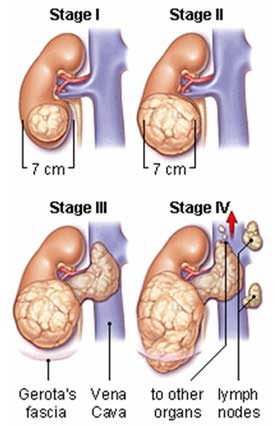
Dr. Uzzo provided a very nice comparison of the “Halstedian” model and “Fisheresque” model of cancer progression. Dr. Halsted, a legend in oncologic surgery, believed in stepwise progression of disease from stage 1 -> stage 2 -> stage 3 -> stage 4, which supported utilization of adjuvant therapy rather than NAT. However, Dr. Fisher was a strong proponent of the idea that a subset of patients were likely metastatic at inception, which better supported the need for NAC.

When looking at NAT, there are some key questions:

1) Does it work? (does it shrink the tumor? Can it work as a “litmus test” prior to cytoreduction? Can it control distant disease?)
2) Is it safe?
3) Are there translational signals?

In terms of tumor shrinkage, based on retrospective series and phase II trials, it results in approximately 25% tumor volume reduction, with an objective response rate (ORR) in 30-40% of patients. So, if patients are referred for that indication, that is what a medical oncologist can cite to a surgeon. However, the implications of this are heavily surgeon dependent, and as Dr. Uzzo states, it is a “function of judgment and experience” – if they feel that this will allow for partial resection vs. radical nephrectomy, or make a non-operative patient operative, then it may be worthwhile to proceed. This is difficult to quantify in clinical studies, and selection bias is an unavoidable issue. In his review of NAT to facilitate partial nephrectomy (PNx), there were <200 cases amongst 7 series.1 Similarly, there have primarily only been case reports/series demonstrating tumor thrombus reduction (25-40%), but rarely does it change the level of thrombus without a concomitant risk of toxicity.

In terms of efficacy, he reviewed a few clinical trials of neoadjuvant targeted therapies, including pazopanib.2 While many of these had some tumor size reduction, they often had high rates of patients not making it to surgery due to adverse events. Importantly though, a significant portion did not make it to surgery due to progression of extrarenal disease. As such, he emphasizes that NAT may be utilized as a litmus test for patient response. Patients progressing on NAT likely wouldn’t have benefited from surgery anyway.

No biomarkers have correlated with ORR in NAT trials.

In summary, NAT is not in the guidelines, high quality guidelines are limited, and there is no long-term data. While newer therapies (cabozantinib, immune checkpoint blockage) may change management, clinical trials are the recommendation for now.

Three clinical trials in NAT space:
CARMENA – activated in 2009, still accruing but having difficulty. Testing the importance of surgery – comparing surgery + adjuvant sunitinib vs. sunitinib alone.
SURTIME – testing sequencing (sunitinib -> surgery vs. surgery -> sunitinib). While initially expecting 440 patients, they have modified study to accrue 98 patients (study closed). In data analysis phase now.
ADAPT – SUO CTC joint effort, they have accrued 713/1133 patients in 3 years. Tests sequencing, including the use of autologous dendritic cell immunotherapy and sunitinib.

Adjuvant Therapy (AT)
Recent publications on adjuvant trials have increased interest in this treatment option. However, there are still no approved ATs for RCC. Dr. Uzzo breaks down the history of AT in RCC into three time periods: the “dark ages”, the “middle ages” and “the future.”

In the “dark ages” of AT, numerous trials were done but it combined “ineffective surgery with completely ineffective systemic therapy.” None of them showed significant benefit, though many had significant flaws.3

More recently, we have come into the “middle ages”, where we utilize “ineffective surgery with more effective systemic therapy.” As is well known, S-TRAC4 and ASSURE5, presented conflicting results regarding disease-free survival outcomes in the adjuvant setting. Dr. Uzzo did highlight the key differences in the studies (only cT3-4 disease in S-TRAC, primarily clear-cell histology in S-TRAC) that may have contributed to the discrepancy. However, even when the clear-cell subset of the ASSURE cohort was analyzed, there was no DFS benefit. Two ongoing trials for whom results are pending are PROTECT (pazopanib) and SORCE (sorafenib). The PROTECT trial investigators should be presenting their results later in the meeting.

He very nicely looked at the role of adjuvant therapy in other malignancies (breast cancer, colorectal cancer, melanoma and GIST) and found DFS benefit to be 4-11% (modest), often times with significant monthly cost. As such, he makes a good point, that adjuvant therapy touted as standard of care in other malignancies doesn’t have as much of a benefit as we often put faith in.

Adjuvant therapy is only marginally effect because of
1) Poor timing and patient selection
2) Bad biology
3) Ineffective therapies

In RCC, based on prior literature regarding growth kinetics, tumor doubling time, and presentation of metastatic disease, micrometastases typically present as visible disease between 6-11 years later. Perhaps we are not giving systemic therapy at the right time?

So, while it has not been shown to be highly effective in RCC yet, he recommends:
1) Improving timing (using CTCs and biomarkers)
2) Attacking tumor stem cells (yet to be identified)
3) Attack less promiscuous upstream targets (balance toxicity for specificity)

The future is promising. The “New” Age hopes to combine “incompletely effective surgery with potentially more effective systemic therapy.” He cites two trials, the ECOG PROSPER trial (nivolumab) and the SUO-CTC INmotion trial (atezolizumab), as upcoming studies with novel therapies that may provide new standards.

Overall, in terms of perioperative systemic therapy for RCC, there are no approved options. However, clinical trials with more effective therapies and better patient selection represent the future.

Presented By: Robert G. Uzzo, MD, FACS, Fox Chase Cancer Center, Philadelphia, PA

Written By: Thenappan Chandrasekar, MD, Clinical Fellow, University of Toronto, Princess Margaret Cancer Centre
Twitter: @tchandra_uromd

at the 2017 ASCO Annual Meeting – June 2 – 6, 2017 – Chicago, Illinois, USA

From https://www.urotoday.com/conference-highlights/asco-2017/asco-2017-renal-cancer/96168-asco-2017-perioperative-systemic-therapy-for-kidney-cancer-current-data-and-ongoing-trials.html?utm_source=newsletter_4518&utm_medium=email&utm_campaign=asco-2017-day-2-highlights

Current Therapeutics of Kidney Cancer: Landmark Trials


Chicago, IL (UroToday.com) Dr. Vaishampayan provided an excellent walk down memory lane, highlighting the landmark trials in kidney cancer over the last 20 years at this morning’s ASCO 2017 annual meeting session “Evolving Treatment Paradigm in Renal Cell Carcinoma.”


Dr. Vaishampayan started by highlighting SEER data that suggests that although the incidence of kidney cancer has increased over the past 40 years, the mortality rates have essentially stayed the same over this time period. IL-2 has been approved for treatment of advanced RCC since 1992 and results of 255 patients who received high-dose IL-2 therapy demonstrated an objective response rate (ORR) of 14%, complete response (CR) rate of 5%, partial response (PR) rate of 9% [1]. Data from the PROCLAIMSM trial of 352 patients receiving targeted therapy prior to or following high dose IL-2 demonstrated 4% CR, 13% PR, 39% stable disease (SD), and 43% progressive disease (PD) with IL-2, demonstrating a clinical benefit for patients who progressed on targeted therapy [2]. Conclusions from these IL-2 studies include the fact that certain patients treated with IL-2 will have a CR+PR (~15%), however the majority of these patients are intermediate and not high risk. Furthermore, despite the toxicities of IL-2, they are predictable and manageable, and it is a remarkably time and cost effective therapy. Dr. Vaishampayan then highlighted that based on a meta-analysis of phase III trials of cytoreductive nephrectomy in the interferon era, patients derive a statistically significant survival benefit [3]. However, as Dr. Vaishampayan notes, based on recent SEER data, only 1/3 of patients receive cytoreductive nephrectomy.

The early to mid-2000’s saw the development of TKI therapy. In 2007, Escudier et al. demonstrated that sorafenib compared to placebo prolonged progression-free survival (PFS) in patients with advanced RCC [4]. Additional trials that year also demonstrated improved PFS for sunitinib compared to interferon-alfa [5], as well as temsirolimus compared to interferon alfa, particularly in patients with poor prognosis [6]. In 2013, we saw the COMPARZ trial of pazopanib vs sunitinib in the 1st line for mRCC, demonstrating comparable efficacy between the two agents (median OS: sunitinib 29.3 months vs pazopanib 28.4 months), although with improved tolerability with pazopanib [7].

There is currently a plethora of phase III trials for second line therapy for patients with mRCC that have reported in the past few years. In 2015, the METEOR trial (cabozantinib vs everolimus) reported that PFS was longer in the cabozantinib arm compared to everolimus (HR for death 0.67, 95%CI 0.51-0.89) [8]. A recent updated analysis of this data demonstrated improved OS, delayed disease progression, and improved ORR for cabozantinib [9]. Finally, Motzer and colleagues assessed lenvatinib + everolimus and lenvatinib alone and found that PFS for patients treated with combination therapy (HR 0.40, 95%CI 0.24-0.68) and lenvatinib alone (HR 0.61, 95%CI 0.38-0.98) was improved compared to everolimus alone [10].

In conclusion, there are many novel immune therapy trials on-going, but the landmark trials have established efficacy of multiple therapies in advanced RCC. As Dr. Vaishampayan notes, with multiple therapies available, a discussion of risk/reward ratio should occur with each patient. Certainly, we have hopes that single biomarker driven therapy may eventually be possible, however this is not currently available to ultimately guide precise treatment management.

Presented By: Ulka N. Vaishampayan, Karmanos Cancer Institute, Detroit, MI, USA

Written By: Zachary Klaassen, MD, Urologic Oncology Fellow, University of Toronto, Princess Margaret Cancer Centre
Twitter: @zklaassen_md

References:

1. Fyfe G, Fisher RI, Rosenberg SA, et al. Results of treatment of 255 patients with metastatic renal cell carcinoma who received high-dose recombinant interleukin-2 therapy. J Clin Oncol 1995 Mar;13(3):688-696.
2. Clark JI, Wong MK, Kaufman HL, et al. Impact of sequencing targeted therapies with high-dose Interleukin-2 Immunotherapy: An Analysis of Outcome and Survival of Patients with Metastatic Renal Cell Carcinoma from an Ongoing Observational IL-2 Clinical Trial: PROCLAIMSM. Clin Genitourin Cancer 2017 Feb;15(1):31-41.
3. Flanigan RC, Mickisch G, Sylvester R, et al. Cytoreductive nephrectomy in patients with metastatic renal cancer: a combined analysis. J Urol 2004 Mar;171(3):1071-1076.
4. Escudier B, Eisen T, Stadler WM, et al. Sorafenib in advanced clear-cell renal-cell carcinoma. N Engl J Med 2007 Jan 11;356(2):125-134.
5. Motzer RJ, Hutson TE, Tomczak P, et al. Sunitinib versus interferon alfa in metastatic renal-cell carcinoma. N Engl J Med 2007 Jan 11;356(2):115-124.
6. Hudes G, Carducci M, Tomczak P, et al. Temsirolimus, interferon alfa, or both for advanced renal-cell carcinoma. N Engl J Med2007 May 31;356(22):2271-2281.
7. Motzer RJ, Hutson TE, Cella D, et al. Pazopanib versus sunitinib in metastatic renal-cell carcinoma. N Engl J Med 2013 Aug 22;369(8):722-731.
8. Choueiri TK, Escudier B, Powles T, et al. Cabozantinib versus Everolimus in Advanced Renal-Cell Carcinoma. N Engl J Med 2015 Nov 5;373(19):1814-1825.
9. Choueiri TK, Escudier B, Powles T, et al. Cabozantinib versus Everolimus in advanced renal cell carcinoma (METEOR): final results form a randomized, open-label, phase 3 trial. Lancet Oncol 2016 Jul;17(7):917-927.
10. Motzer RJ, Hutson TE, Glen H, et al. Lenvatinib, everolimus, and the combination in patients with metastatic renal cell carcinoma: a randomized, phase 2, open-label, multicenter trial. Lancet Oncol 2015 Nov;16(15):1473-1482.

at the 2017 ASCO Annual Meeting – June 2 – 6, 2017 – Chicago, Illinois, USA

From https://www.urotoday.com/conference-highlights/asco-2017/asco-2017-renal-cancer/96167-asco-2017-current-therapeutics-of-kidney-cancer-landmark-trials.html?utm_source=newsletter_4518&utm_medium=email&utm_campaign=asco-2017-day-2-highlights

9 Tips For Safe Travel With Diabetes

Many of these tips work for Cushing’s patients on Growth Hormone, as well.


Traveling, whether it be for business or pleasure can easily take you out of your diabetes care routine. Before hightailing it out of town, make sure you are prepared. A little extra homework will help keep your diabetes from putting any kinks in your long-awaited travel plans.

How you prepare greatly depends on where you’re going and for how long. Ask yourself, how will your lifestyle change while traveling? Will you be able to prepare your own food, or will you be eating out? Will you be able to maintain adequate exercise or will you have more down time?

These helpful tips can help you stay on track with your diabetes treatment plan during your summer vacation getaways.

Read more here: 9 Tips For Safe Travel With Diabetes | MedicAlert Foundation

To improve chronic pain, get more sleep (coffee helps too)

New research from Beth Israel Deaconess Medical Center (BIDMC) and Boston Children’s Hospital shows that chronic sleep loss increases pain sensitivity. It suggests that chronic pain sufferers can get relief by getting more sleep, or, short of that, taking medications to promote wakefulness such as caffeine. Both approaches performed better than standard analgesics in a rigorous study in mice, described in the May 8, 2017 issue of the journal Nature Medicine.

Source: To improve chronic pain, get more sleep (coffee helps too)

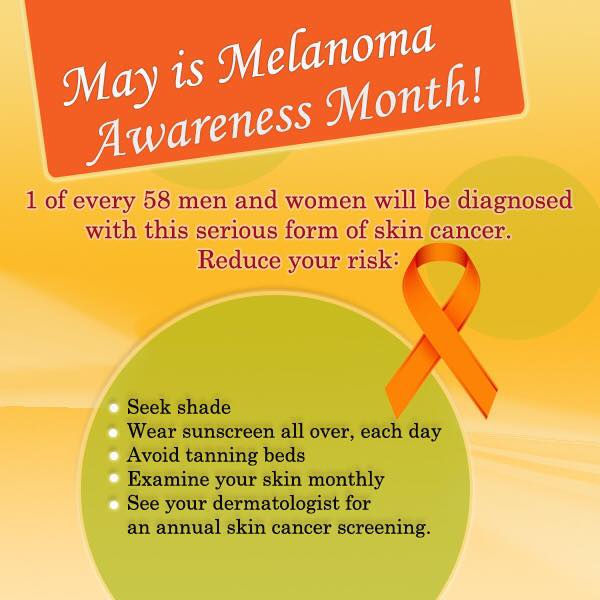
May is Melanoma Awareness Month


I’ve posted about our family’s experiences with melanoma before.  We were lucky and caught it in time but a good family friend didn’t.

May is designated as National Melanoma Month.   Included in that designation is National Melanoma Monday, which is the first Monday in May.  The American Academy of Dermatology has set aside this day to raise awareness about skin cancer.

Melanoma is a type of skin cancer, and it is the deadliest of skin cancers.

There will be many events focused on skin health, sun safety, tanning prevention, and skin cancer screenings and resources.

All are asked to join the American Academy of Dermatology in wearing orange and encouraging others to wear orange for skin cancer awareness.

Know the warning signs and check with your doctor if any of them appear.

Early signs of melanoma are changes to the shape or color of existing moles or, in the case of nodular melanoma, the appearance of a new lump anywhere on the skin. At later stages, the mole may itch, ulcerate or bleed. Early signs of melanoma are summarized by the mnemonic “ABCDE”:

  • Asymmetry
  • Borders (irregular with edges and corners)
  • Color (variegated)
  • Diameter (greater than 6 mm (0.24 in), about the size of a pencil eraser)
  • Evolving over time

These classifications do not, however, apply to the most dangerous form of melanoma, nodular melanoma, which has its own classifications:

  • Elevated above the skin surface
  • Firm to the touch
  • Growing

Metastatic melanoma may cause nonspecific paraneoplastic symptoms, including loss of appetite, nausea, vomiting and fatigue. Metastasis of early melanoma is possible, but relatively rare: less than a fifth of melanomas diagnosed early become metastatic. Brain metastases are particularly common in patients with metastatic melanoma. It can also spread to the liver, bones, abdomen or distant lymph nodes.


Kidney Cancer Symptoms: 12 Early Warning Signs of the Life-Threatening Disease


More than 12,000 people in the UK are diagnosed with kidney cancer each year, according to 2014 statistics.

And although 42% of cases are deemed “preventable”, only 50% of patients survive kidney disease for 10 or more years.  I will celebrate 11 years next month, on May 9!

It’s the seventh most common cancer in the UK and is much more prevalent in males.

But do you know the warning signs of the potentially deadly disease?

Here we reveal the 12 main symptoms of kidney cancer:

1. Blood in your pee  Not until the day I was diagnosed.

You may notice your pee is darker than normal or reddish in color. This could also be a sign of chronic kidney disease and bladder cancer.

2. A persistent pain in your lower back or side, just below your ribs No

3. A lump or swelling in your side (although kidney cancer is often too small to feel) No

4. Extreme tiredness (fatigue) Possibly, although I assumed it was from Cushing’s

5. Loss of appetite and weight loss No

6. Persistent high blood pressure Yes

7. A high temperature of 38C (100.4F) or above No

8. Night sweats No

9. In men, swelling of the veins in the testicles Nope

10. Swollen glands in your neck No

11. Bone pain No

12. Coughing up blood No

If you are concerned about any of these symptoms you should see you GP, they will carry out a series of tests, including urine and blood tests, in order to get an accurate diagnosis.

What are the treatment options?

The treatment will depend on the size and severity of the cancer and whether it has spread to other parts of the body.

These are the five main treatments:

1. Surgery to remove part or all of the affected kidney Yes, all plus some other stuff

This the main treatment for most people

2. Ablation therapies No

Where the cancerous cells are destroyed by freezing or heating them

3. Biological therapies No

Medications that help stop the cancer growing or spreading

4. Embolisation No

A procedure to cut off the blood supply to the cancer

5. Radiotherapy No

Where high-energy radiation is used to target cancer cells and relieve symptoms

For more information go to nhs.uk/Conditions/Cancer-of-the-kidney

Adapted from http://www.dailystar.co.uk/health/605586/Kidney-cancer-symptoms-treatment-males-females-early-warning-signs

Chronic Migraine Study


Chronic migraine headaches can interfere with work, family, and leisure.

Medications may not manage the pain, nausea, dizziness and other symptoms associated with migraines. This trial may help people suffering from chronic migraines maintain their lifestyle better – and it pays!

Learn more about this trial.

Managing Menopause Matters

Menopause is a natural part of aging in women. It affects each woman differently, and the symptoms associated with menopause can be difficult for some.

Learn from Wen Shen, M.D., director of the Menopause Consultation Clinic, about menopause symptoms and the latest treatment options. Knowing what to expect can help you stay as healthy as possible during this phase of your life.

Thursday, April 20, 2017

7–8 p.m. EST

REGISTER:

US Residents

International Residents

Giving Thanks, Day 3

Adapted from http://www.maryo.co/giving-thanks-day-3/

Today I am hugely thankful that the last major issue we had here was in 2013 when Tom had his heart attack.  That event caused me to start a whole new blog to post about our experiences.

screenshot-2016-11-05-06-30-59

Adapted from https://maryomedical.com/2013/02/08/the-beginning/

January 27, 2013 was our 40th anniversary.  DH called me and said he was leaving a conference in Washington, DC and we’d go out to brunch when he got home.

The next thing I had heard was that he was in the ER with a suspected heart attack.  I rushed to the ER and found him in his cubicle.  He’d had 3 nitroglycerine pills by then and figured he could go home.

Wrong!  They had him stay overnight at the hospital.  January 28th, they decided to send him by ambulance to Fairfax Hospital for a cardiac catheterization and possible stent.

At the end of that, the surgeon came into my waiting room and said that he needed triple bypass NOW.  Three of the arteries were 100% blocked.  They got me calmed down to see him in the OR.

He was trying to get odds of not doing this surgery and just leaving then.  Finally, I said that he would do this surgery, we weren’t going to fool with this.

I really lost it when they asked me if we had any children and I said 1 son in NYC.  They called him at work in New York and had him get there as soon as possible.  I’m sure he could hear the fear in my voice.

They wheeled DH off for surgery and I waited again.  Luckily, 2 church friends came and sat with me and our pastor arrived about 8:00PM.  Our son arrived about 8:30PM after taking the Acela and a taxi directly to the hospital.

The surgery was over about 9:00PM but when we saw Tom, he was still under anesthesia.  They kept him that way until the next morning since he was too confused when they woke him up.

Long story short (too late!) – he got out of the hospital on the 31st and I played nurse 24/7.   He couldn’t drive/go anywhere for 6 weeks, and then there were 12 weeks of cardiac rehab.

One of the things that came out or cardiac rehab was becoming friendly with 2 other couples (although one of them has since split up).  We go out to dinner every couple months…and none of the surgeons would be happy about our choices.

heart-line

A slightly different take on the events, written 3 weeks later on the same blog.

Icy Days and Mondays…*

* With apologies to Karen Carpenter!

I know I’m not supposed to “relive” events.  I have done that too often with my Cushing’s and cancer adventures and I’m told that reliving causes nearly as much stress as the original event.

So, I plan to write down my memories here and try to let them go…

It all started on Sunday, January 27, 2013 – our 40th wedding anniversary.  I picked up my mom and went to church so I could sing in the choir.  DH went to a meeting of some sort on Benghazi.

After church, I stopped off in the church office for a goodie bag that the Staff Parish Committee had left.

Dropped my mom off at her house and went home.  I put the goodie bag on the dining room table and logged onto the computer to do some work.

I got a couple text messages from DH:

Text message

I figured I’d take a nap until DH came home for that late brunch.

The next thing I hear was my phone ringing, a call from DH.  He was in the ER at Fair Oaks with a heart attack.  OMG!

I immediately leaped up and rushed out the door.  I called one of my pastors and got to the ER in record time.   When I arrived, he was in a bed, all hooked up to monitors, fluids and such.  He was awake and feeling pretty well thanks to the nitroglycerine they had given him immediately after arrival.

When we had a chance to talk, it turned out that he had been in his conference and realized his chest was getting tight.  He found the hotel’s store and bought aspirin – 3 for $11.00 which he thought was extravagant.  He bought them and took them anyway – and probably saved his life.

On the way home, he was feeling pretty good so he stopped at the mall to buy an anniversary gift.  The salesgirl in Zales didn’t know that ruby was the stone for the 40th anniversary and was kind of ribbing DH for waiting until the last minute to buy a gift.  He walked out of there, felt more tightness and headed to the ER…where he called me.

DH was feeling pretty well thanks to the nitroglycerin and aspirin plus whatever else they had in the IV and wanted to go home.  The staff said no way – he had to stay overnight so he could be monitored.

The “automatic clock” on the wall said it was Monday.  Other rooms said Sunday.  Hmmm

A trainee EMT came in to ask some questions as part of his learning process.  Every time DH mentioned the word “Benghazi”, his blood pressure spiked about 40 points or so.  That term became verboten ever after.

My pastor stopped by and we had some nice chats and prayers.

Time passed, tests were done, doctors and nurses stopped by.  Finally, DH was moved to his room upstairs.

About 9 or so I went home and found our dog huddled by the front door – I had left so quickly I hadn’t left her any lights on.  I imagine she was quite worried.

I can’t even remember what I had to eat for dinner but I really wanted something chocolate.  On a whim, I looked in that goodie bag and there was a double-sized brownie.  I think I ate that in record time and it really hit the spot.

Ice

Monday morning (for real!), I checked the weather and found that school was starting late because of icy conditions.  I put on boots and took the dog out.  It seemed to be raining – if it’s raining, it must be warm, right?  So I didn’t really pay attention (and I had other things on my mind!) and completely missed seeing the black ice.

Next thing I knew, I had fallen on one knee, my cell phone in my pocket bruised my other thigh and my left arm hurt where I’d reached out to catch myself.  Luckily, I hadn’t let go of the dog’s leash.

I ended up sitting in a puddle of icy water for a long time, figuring out how to get up.  I finally sort of crawled up the trash can that was sitting in the driveway.

The dog had an abbreviated walk, I changed my wet, cold clothes and headed to the hospital.  I was showing DH my knee and one of the staff bandaged it up for me.  I told him I hadn’t fallen at the hospital and wouldn’t sue but I guess he wanted to be sure.

(Today, Monday February 18, my knee still has a huge lump under the skin and hurts when I touch it, although I’m no longer limping,  The bruise/pain from cell phone finally went away)

The hospital staff decided DH should go to another hospital which is world renowned for its work with heart cases to have a heart catheterization and possible stent.  DH was ready to walk out to my car to drive him to Fairfax Hospital.  He wasn’t thrilled when he was strapped to a gurney and out to an ambulance instead.

I headed over in my car.  They’d changed the entrances to the hospital since the last time I was there and I couldn’t find the “Grey Entrance”.  Finally, after wandering around for a long time, I found it.

I saw DH in the prep room where they got him ready for the heart catheterization – then they rolled him away after explaining all the things that could go wrong.

I went out to the waiting room, got some coffee and a sandwich and hunkered down with my iPad.

Eventually, my beeper went off and I was called back to the room where DH had been prepped.  The surgeon was there this time.  She said that 3 arteries were nearly 100% blocked and they needed to do emergency triple bypass.  They also needed me to convince DH of this since he was figuring he could tough it out.

I started crying but she said I had to get myself together and convince him NOW.  I had to put on scrubs and off I went to the OR.  I got there, DH was on the table trying to figure out the odds if he didn’t do this surgery.  All the medical staff said that he had  a very low chance of survival without the operation.  He still wasn’t sure.  He wasn’t afraid to die.  Tough Guy, Yadda Yadda.

One of the nurses asked me if we had any kids.  I said only one, in NYC.  She said I should call him and get him here ASAP.  She even dialed the number.  I talked to DS at work and he agreed to come right away.  He was pretty scared, too.  He later revealed that he had been crying on the train ride.

I went back to the OR, told DH that DS was coming and that he was going to do the surgery like it or not.  I signed the paperwork and sent him to a very scary surgery.

It was about 4:30 by then and I needed to take the dog out again.  They said I could go home – surgery wouldn’t be over until about 8:00PM or so. Got home, took the dog, made sure that there were lights on, and headed back to the hospital.  Another pastor from my church called.  He said he’d be by the waiting room later.

Two friends from the church office texted me to say they were coming over to sit with me in the waiting room.  They got there about 6:30 and we decided food might be a good thing.  We headed out, following a variety of directions and signs and walked for a l-o-n-g time.

My knee was killing me.  We got to the cafeteria and found out that it was closed.  the 24-hour one was elsewhere.  We finally found that, got some food and my cellphone rang.  The surgeon would be coming out soon to talk to me.

We hustled back to the waiting room and the surgeon came out about 8:00 with good news.  Successful surgery!  DH wasn’t awake yet but we could see him about 9:00PM.

The pastor arrived about 8:30, then DS got there about 8:45.  Finally, they said we could see DH although he still was asleep.  My friends left, pastor and DS went in to see him in ICU, sleeping so peacefully with so many lines attached.  The pastor prayed, then left.  DS and I decided to stay to see DH awake.

About an hour later, the ICU tech said they were going to keep him asleep overnight so we went home.

Monday

Tuesday, January 29 – DS called the hospital fairly early and found that DH was still a bit agitated so they were keeping him under a bit. I took the dog out and we got ready to head back.

I got a call that he was waking up but agitated.  He kept fighting with the nurses on the day of the week.  He kept saying it was Monday, even though it was Tuesday.  Surprise, surprise.  The calendar on the wall hadn’t been changed.  It still read Monday.  No wonder that’s what he thought!

We stayed all day, though nurses, techs, doctor visits and such.  He was in ICU so was monitored very well.  DH was quite confused and repeated himself a lot.  He wasn’t quite sure what had happened.

Monday

Wednesday, January 30.  DH had been moved from ICU into a regular room and we had to follow visiting hours, even though we were family.  We could visit at 11 and had to leave at 1, then back for 6-8.  Actually, this worked out well since I was able to take my first nap since this whole ordeal began.

DH had called DS early in the morning and  said he “needed” his cell phone to make some work calls.  Luckily, DS talked him out of that, saying that he could say some wrong things, given his temporary memory issues.  Thank goodness!  I didn’t want him spending his days talking on the phone.

We got there about 10:45am and they still wouldn’t let us in due to “flu season”.  I’m not sure how we could give him the flu in those 15 minutes before official visiting hours.

I glanced at the whiteboard on the wall where the nurses’ names, doctor’s name and such were written.  Unfortunately, no one had changed this whiteboard since Monday, so that’s what it still said.  <sigh>

We visited – DH got to eat a bit and had started having lines removed.  He thought he might put his shorts on so went into the bathroom to do that.  Unfortunately, he managed to pull the IV out of his hand and bled quite a bit.  The nurse sent him back to bed and said no more of that!

A representative from the group Mended Hearts stopped by with information and a heart-shaped pillow.  They have meetings the first Saturday of the month, so we might go to some of those.

The first pastor dropped by again and we made plans for Friday to pick up DH’s car which was still at the ER.  No one else I know could get it – it’s a standard shift car.

Not much else – visiting, napping, improvements every day.

Not Monday

Finally, it’s not Monday!  Nowhere, nohow.  Just Thursday, January 31 after 4 days of Monday.  Hooray!

DS had a headache so I went to the hospital alone.  He was going to come for the nighttime visiting hours.  As it happened, DH came home this day after lots of testing, last minute X-Ray, discharge notes, complaints about the night nurse…

We got home about 5:00PM.  Yea!

Now the real work began – visiting nurses, medications, doctor visits, rehab.

Since it’s no longer Monday, this post is over 🙂

heart-line

Whew!  There was a lot more after the surgery – visiting nurses, cardiac rehab, so on and on.

I am hugely thankful for my pastors, friends, family, people who brought us dinners, all the doctors, nurses, surgeons, visiting nurses, rehab personal, Mended Hearts, ambulance folks, aspirin, nitroglycerin, insurance, Fair Oaks Hospital, Fairfax Hospital, everyone involved in any way with this escapade.

Five orange pumpkins sit in a row in front of a distressed, wooden background.